
Lexus.com Vehicle Model Page
I led the redesign of the model pages on Lexus.com to improve user experience and streamline asset production. The primary goal was to present comprehensive information about each vehicle while focusing on storytelling to highlight their unique attributes. By shifting from isolated features to a narrative driven approach, we effectively showcased each model's distinctiveness. Additionally, I implemented an atomic design structure to enhance reusability across components, resulting in a successful redesign that balanced user engagement with production efficiency.
A key part of the work was partnering closely with the strategy team to reframe what a model page could be. Rather than a reference document users jumped around in, we envisioned it as a single continuous experience, the way a Disneyland ride works: you sit down, and the story unfolds around you as you move through it. Every module was sequenced intentionally so the user was carried through the full narrative of the vehicle without ever needing to navigate away or hunt for information.

Project Goals
The existing model pages presented vehicle information in isolation, disconnected features without a cohesive story. Each feature section lived on its own dedicated page, which required an enormous volume of individual creative assets to support. The cost and time to produce and maintain those assets across a full model lineup was unsustainable at scale.
The redesign needed to solve both problems at once: consolidate feature content into a single, cohesive view while maintaining the richness of the storytelling. By streamlining how features were displayed, the team cut creative asset production cost by roughly 60% and built a system that could scale across the Lexus model lineup.
Consolidated Feature View
Replace individual feature pages with a single streamlined view, eliminating the unsustainable creative asset burden that came with maintaining separate pages per model.
Atomic Design System
Implement a reusable component structure to enhance consistency and streamline asset production across all models.
Narrative Driven Design
Shift from isolated feature lists to a cohesive storytelling approach that highlights each model's unique character.
Global Responsiveness
Ensure a seamless, consistent experience across devices and regions for a global audience.
Research to Delivery
I led the design process end to end, from initial discovery through to engineering handoff, working closely with stakeholders, product managers, and global development teams to ensure the system could scale across all Lexus models.
Strategy & Vision
Working alongside the strategy team, we redefined what a model page could be. Instead of a reference document users navigated piecemeal, we designed a single continuous page experience, like a Disneyland ride where you sit down and the story unfolds around you. Every module was sequenced so the user moved through the full vehicle narrative without ever leaving the page.
Research & Discovery
Audited existing model pages, analyzed user behavior data, and benchmarked against leading automotive and luxury brand experiences to identify gaps and opportunities.
Design Concept
Developed the narrative driven framework, organizing each model page around a story arc rather than a feature checklist, with the Hero, Visualizer, and Information Layer as the three core modules.
The Challenge
Designing a system flexible enough to work across dozens of Lexus models, each with different feature sets, imagery, and regional requirements, while maintaining a consistent, premium feel.
User Testing & Key Findings
Testing informed the narrative approach and the trim visualizer, with the color swatch model reviewed against the previous static layout to guide the final direction.
Three Modules, One System
The redesign centered on three core modules that worked together as a unified system. Each module was designed as a set of atomic components, enabling rapid assembly of new model pages without bespoke design work.
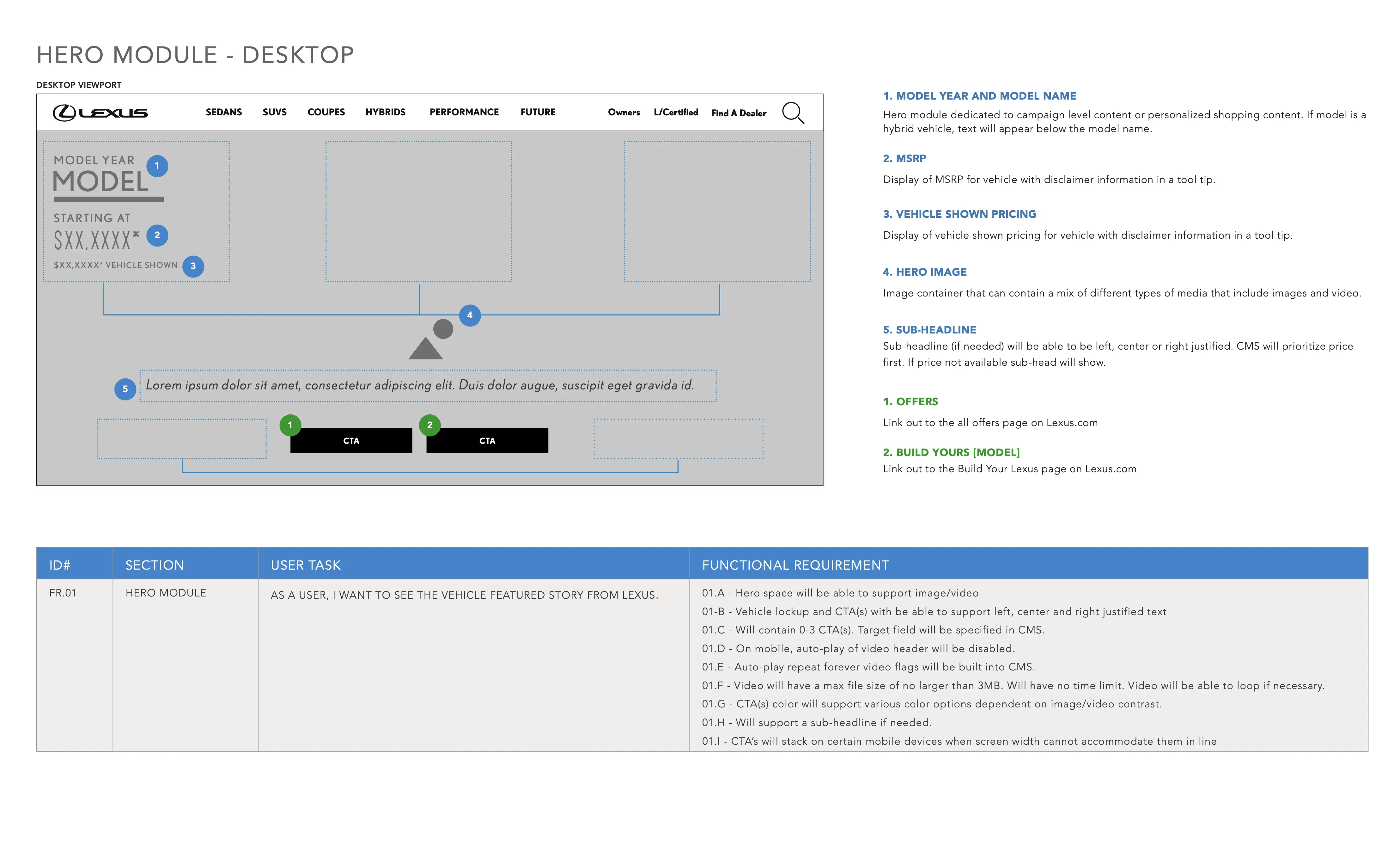
Hero Module
The Hero block highlighted campaign level content, incorporating high quality visuals, MSRP details, and multiple call to action buttons. Video support was added for immersive storytelling, with mobile specific adjustments such as autoplay guidelines to enhance performance.
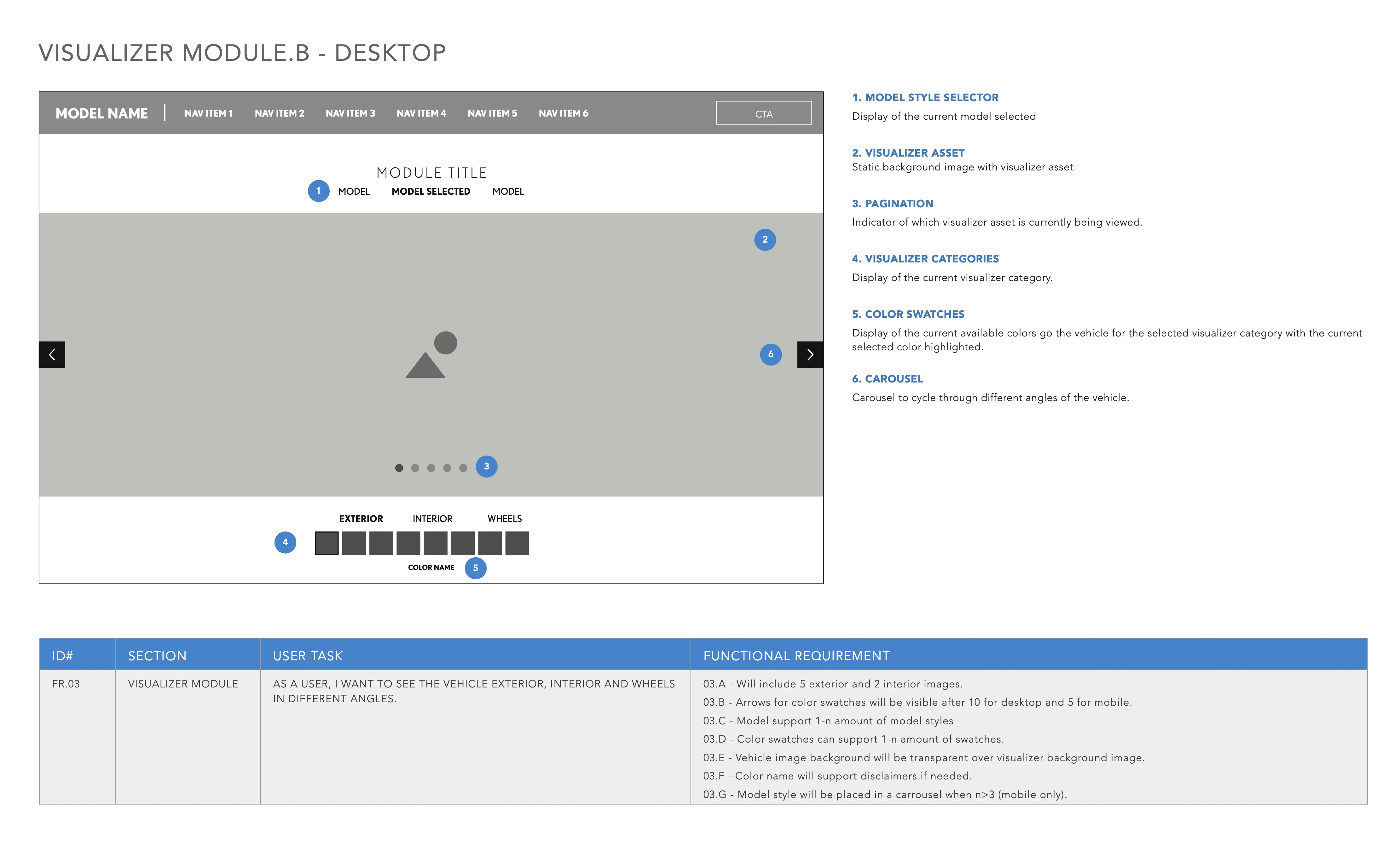
Visualizer Module
The features included a model selection interface with carousel style browsing, allowing users to easily explore various options. Customization was enhanced through color swatches, enabling users to visualize different configurations. Pagination provided a seamless way to navigate and explore multiple visual perspectives of each vehicle.
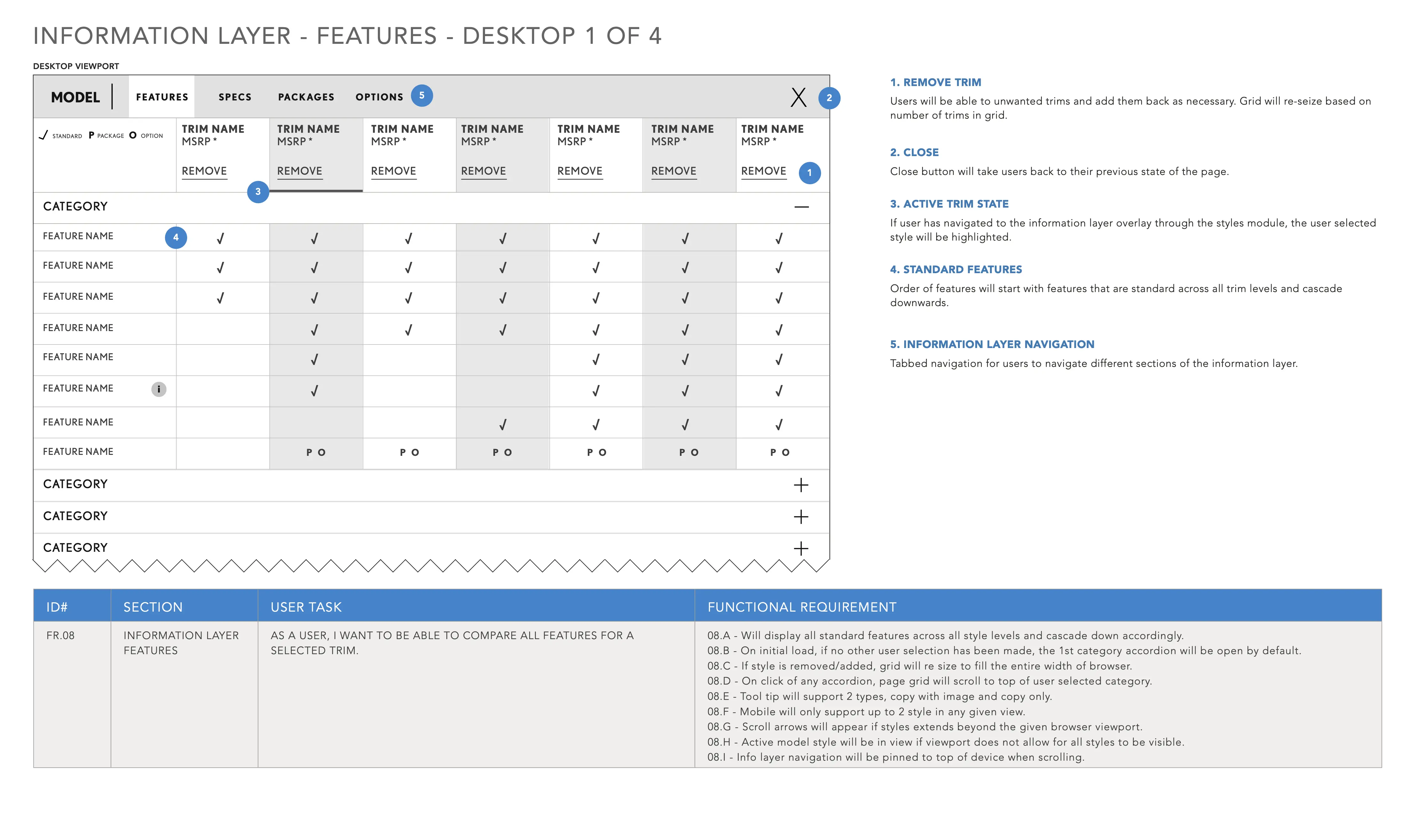
Information Layer
The Information Layer consolidated detailed specifications, trim comparisons, and feature breakdowns into a user friendly format. Features such as tooltips and accordion style tabs streamlined complex data presentation.
What the redesign delivered
The atomic system was the real outcome: a single continuous model page assembled from reusable components, which cut the creative production burden that had made the old per-feature pages unsustainable. The narrative structure carried users through the full vehicle story in one flow rather than scattering it across separate pages, and the responsive build held that experience together across devices.